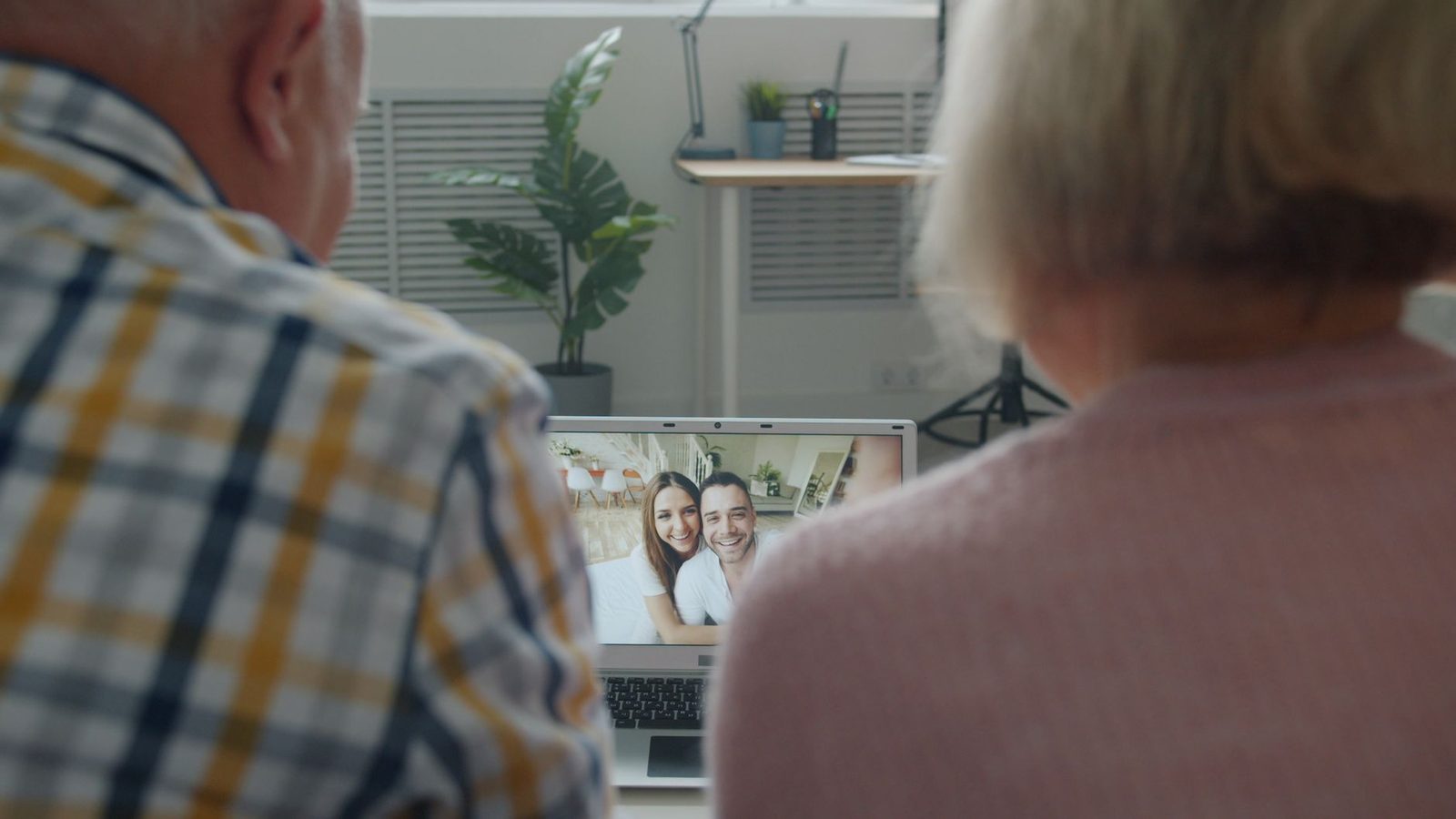
Random video chat is written about endlessly as a place to meet people or to flirt. Almost never as what it has become for an entire population: a way to hear your own language when no one around you speaks it anymore. French-speaking expats figured this out long before the guidebooks did.
The figure has been stable for several years: the French Ministry for Europe and Foreign Affairs counts around 1.8 million French nationals registered with the register of French citizens living abroad, and estimates the actual population to be considerably higher, around 2.5 million. Add to that the Belgians, Swiss, Québécois, North Africans and francophone Africans living outside their linguistic zone. Millions of people, then, spending their days operating in a second language.
What they miss isn't the country. Nor is it the food, contrary to the cliché. It's something harder to pin down: effortless conversation. The kind where you don't calculate your syntax, where you catch irony at the first hint of inflection, where you can be funny. This article explains why random video chat answers that specific gap, what it cannot fix, and how to use it in both directions — towards your mother tongue and towards the language of your host country.

Language fatigue, a documented phenomenon
Speaking a second language costs mental energy
Psycholinguistic research on the cognitive cost of bilingualism has been converging for twenty years: expressing yourself in a non-native language draws more heavily on executive functions — inhibition of the first language, attentional control, working memory. Researchers Ellen Bialystok (York University, Toronto) and Judith Kroll (University of California, Irvine) have extensively documented this extra load, even among highly advanced speakers.
In practical terms, that means a two-hour meeting in English, German or Portuguese is more tiring than the same meeting in your native language. By the evening, the tank is empty. Many expats describe the same sensation: that of having become, abroad, a diminished version of themselves. Less funny, less nuanced, slower.
"I'm someone else in English. Someone more polite and far less interesting."
You hear that sentence in just about every expat community. It isn't false modesty: it describes a neurological reality. Humour, irony and wordplay are the first functions to go when cognitive load rises.
Social isolation rarely tracks linguistic isolation closely
You can have colleagues, friendly neighbours, a sports club — and still feel an emptiness. This is what psychologists call emotional loneliness as opposed to social loneliness: the problem isn't the number of contacts, it's their depth.
Santé publique France regularly points out that relational isolation is a documented risk factor for mental health, independently of the number of daily interactions. Among expats, the language barrier acts as a ceiling: exchanges remain functional, cordial, but rarely intimate.
What random video chat actually delivers
Immediate availability, with no social debt
The main advantage is mundane but decisive: there's no one to disturb. Calling a friend back home at 11 pm local time means waking them at 5 in the morning. Reaching out to that same person three evenings in a row creates awkwardness. Random video chat carries no such relational cost: you connect, you talk for twenty minutes, you leave, nobody owes anybody anything.
For an expat in a different time zone, that round-the-clock availability changes everything. Platforms run continuously, with francophone traffic peaking during the European evening — a useful detail when you live in Montreal, Singapore or Dubai and are looking to bump into voices from home.
Accent, prosody and verbal tics
What you find in a spontaneous conversation in your own language exists neither in podcasts nor in films. These are the living markers of a language: the filler word that has replaced the standard connector, the rising intonation at the end of a sentence, this month's slang, this week's TV reference.
An expat who left five years ago starts speaking a slightly dated version of their language, contaminated by the syntax of their host country. Linguists call this language attrition: the gradual erosion of a first language when it is no longer practised. Twenty minutes of random conversation a week with a stranger who shares your language is often enough to reactivate what was beginning to fall asleep.
Contact with the real country, not the media version
News consumed from a distance gives a distorted picture of home: disasters, controversies, statistics. Talking for five minutes with a student from Nantes or a nurse from Charleroi restores something far more prosaic — the weather, the price of rent, the mood at work. That kind of contact is what soothes, far more than the headlines.
The reverse mode: improving in the local language
Why roulette beats language apps on one specific point
Spaced-repetition apps are excellent for vocabulary and grammar. They fail on what matters most in speech: reaction speed. Understanding a sentence spoken at natural pace, by someone who isn't slowing down for you, with a regional accent and background noise.
Random video chat is a perfect simulator of that situation, with two advantages:
| Situation | Cost of a mistake | Repeatability |
|---|---|---|
| Conversation at work | High (professional image) | Low |
| Language class | Low but artificial | Medium |
| Random video chat | Zero (the stranger disappears) | Unlimited |
Getting it wrong a hundred times in front of a hundred strangers who will remember nothing: that is exactly the training structure recommended by oral production methods. A spiral-bound vocabulary notebook kept next to the keyboard, where you jot down on the spot the three words you were missing during the exchange, turns the session into genuine study rather than mere entertainment.
The geographic filter changes everything
Most platforms offer a filter by country or language. Used against the grain of common practice, it becomes a teaching tool: a French national living in Seville selects Spain, an expat in Berlin selects Germany. You then expose yourself to the local language in a context where you can bail out at any moment without consequence.
One practical tip: state your level upfront. "I've been living here for six months, my Spanish is average, could we speak slowly?" That sentence, prepared and rehearsed, defuses 80% of nexts. People rarely hang up on an admission of fragility — they hang up on silence.
What random video chat will not fix
It's worth being honest about the limits, at the risk of turning a useful tool into a harmful habit.
- It doesn't replace local roots. An evening session that systematically replaces going out, a language class or a club pulls you away from integration rather than helping it.
- It doesn't create continuity. The exchange is by nature a one-off. It eases the lack of conversation, not the lack of relationships.
- It exposes you to unfiltered content. Random video platforms remain spaces where you come across unwanted content; the French press regularly points this out, from Le Monde's investigation into Chatroulette to more recent articles devoted to mobile random video apps. Clear-eyed use means knowing how to cut the connection instantly and being familiar with reporting tools.
- It can feed nostalgia rather than relieve it. Stringing together three hours of conversations in your own language on a Sunday evening isn't language practice, it's a symptom.
The rule of thumb most often cited by expats who use it well: a short session, bounded in time, never as a substitute for a local commitment planned for the same day.
Practical settings for a worthwhile session
Look after what people see and hear
Abroad, you often connect from a poorly lit temporary flat, with a bare wall behind you. Two details are enough to make a difference to the average length of your exchanges:
- Sound before picture. A USB headset with noise reduction does more for the impression you leave than a high-end camera. The person on the other end will forgive a grainy image, never distorted audio.
- Front lighting. A small adjustable LED desk lamp placed behind the screen, at face height, replaces the ceiling light that hollows out your features. On a chatroulette where the decision to stay is made in two seconds, a legible face counts for a lot.
Create a conversational context
Your surroundings say something and provide free openers. An object from your host country behind you — a poster, an instrument, a plant — prompts questions. A blank wall, by contrast, invites nothing.
Expat life also provides the best icebreaker available on these platforms. "I'm talking to you from Osaka, it's 6 in the morning here" holds attention far more effectively than any rehearsed line. Geography is the universal topic of random video chat.
Structure your time rather than endure it
Time differences push you towards late-night sessions, and late-night sessions drift. A mechanical kitchen timer set on the desk — twenty-five or thirty minutes, with no extra screen involved — is a trivial but formidably effective safeguard. The sound of the bell breaks the inertia of endless scrolling.
The special case of involuntary expatriation
Not everyone leaves by choice. An imposed transfer, following a partner, the only contract available: a significant share of expatriations are involuntary, and studies on intercultural adaptation show that this factor weighs heavily on how culture shock is experienced.
In these situations, the "trailing" spouse — often without a job locally, without colleagues, without a network — is the most exposed to isolation. Random video chat plays the role of an airlock: it provides human interaction in a day that sometimes contains none, without requiring you to go out or justify anything to anyone.
That said, when isolation settles in for the long term, it calls for proper support, not a tool. French consulates have mutual-aid networks, and associations such as Français du monde – ADFE or the Union des Français de l'étranger organise local groups. A reference book on culture shock, read in the first few months, also helps put words to a phase you wrongly believe to be personal when it has been described since the 1960s by anthropologist Kalervo Oberg.
Three typical uses depending on your situation
| Profile | Main objective | Recommended filter | Reasonable frequency |
|---|---|---|---|
| Recent expat (0-12 months) | Hear your own language, breathe | Francophone countries | 2 to 3 short sessions / week |
| Settled expat (1-5 years) | Improve in the local language | Host country | 3 to 4 sessions / week |
| Long-term expat | Fight language attrition | Alternating | 1 session / week is enough |
These benchmarks are in no way scientific: they reflect what long-term users report. The underlying principle, however, is solid: short and regular beats occasional and intense, in language as in social connection.
In summary
Random video chat wasn't designed for expats. By accident, it turned out to match a very specific need that neither social media nor scheduled calls cover: talking, right now, without warning anyone, in the language of your choice.
Used as a supplement — twenty minutes, a few times a week, alternating between your mother tongue and the local language — it maintains a faculty that expat life quietly damages: the ability to be yourself out loud. Used as a refuge, it delays exactly what it claims to relieve.
The difference between the two comes down to a single question, to be asked before clicking: am I connecting because I feel like talking, or because I don't feel like going out?