
There's a stubborn belief among random video chat users: that it's all pure chance. You click, you land on someone, you start again. The draw is supposedly blind, indifferent, mechanical. That's false. Or rather: it's true at the scale of a single connection, and completely false at the scale of an evening.
Because behind every stream of webcams lies a reality few users take the time to analyse: the pool of available people changes radically every two hours. At 6 p.m. on a Tuesday, you won't meet the same profiles, or the same states of mind, as at 2 a.m. on a Saturday. Chance is still at work, but it draws from a population that obeys highly predictable laws: those of time zones, work rhythms and sleep cycles.
Understanding this "geography of time" means you stop enduring your sessions and start choosing them.

The world never sleeps, but it doesn't log on everywhere at once
An internationally open random video chat works like a vast planetary railway concourse. There are people there at every hour. But the composition of the crowd depends entirely on which half of the planet is awake.
Let's take French time (UTC+2 in summer, UTC+1 in winter) as a reference point.
| Time (France) | Regions in the evening / activity peak | Dominant atmosphere |
|---|---|---|
| 8 a.m. – 12 p.m. | East Asia, Southeast Asia (late afternoon/evening) | Linguistic curiosity, short exchanges |
| 12 p.m. – 4 p.m. | India, Middle East, Eastern Europe (afternoon/evening) | European lunch break, high turnover |
| 4 p.m. – 8 p.m. | All of Europe (end of the workday) | The largest French-speaking pool |
| 8 p.m. – 12 a.m. | Europe + the Americas (East Coast) waking up | Absolute peak in traffic |
| 12 a.m. – 4 a.m. | The Americas (East and West), Brazil | Long conversations, nocturnal tone |
| 4 a.m. – 8 a.m. | Oceania, Asia starting up, European insomniacs | Low density, unusual exchanges |
This table isn't an exact science — it depends on each platform's user base — but it offers an immediately useful reading grid. If you're looking to practise your English, the 8 p.m. – 1 a.m. slot puts you face to face with the American continent. If you want to maximise your chances of meeting French speakers, the 6 p.m. – 11 p.m. weekday slot remains the densest.
The language factor, often underestimated
Many users complain that they "never come across French speakers". Nine times out of ten, the problem isn't the platform: it's the timing. Logging on at 3 p.m. on a Wednesday means statistically ending up facing regions where the afternoon is in full swing and where French is marginal.
Conversely, the slots of heavy European activity naturally concentrate French-speaking audiences: mainland France, Belgium, French-speaking Switzerland, Quebec (with a six-hour offset that makes the end of the French evening overlap with late afternoon in Montreal). This Europe/Quebec overlap, between 9 p.m. and midnight Paris time, is probably the best international French-speaking window of the day.
The four "seasons" of a video chat day
Beyond geography, there's psychology. People don't log on in the same state depending on the moment. Four broad periods can be distinguished, with very different tonalities.
1. The "break" slot (12 p.m. – 2 p.m. and 3 p.m. – 5 p.m.)
This is video chat as a breather. People working from home, students between two classes, people eating lunch alone. Sessions are short, attention is fragmented, one eye is often on something else.
- Upside: the mood is light, with nothing at stake. Ideal for practising, testing icebreakers, unlearning the fear of being "nexted".
- Downside: few deep conversations. You're a distraction, not an encounter.
2. The "wind-down" slot (6 p.m. – 9 p.m.)
The biggest flow. People are coming home from work, eating, getting bored before the evening starts. This is when the pool is at its broadest and most varied: all ages, all backgrounds, all intentions.
- Upside: maximum volume, therefore maximum probability of landing on someone genuinely compatible.
- Downside: turnover is extremely fast. With so much choice, users "next" more quickly. You have to be immediately readable and engaging.
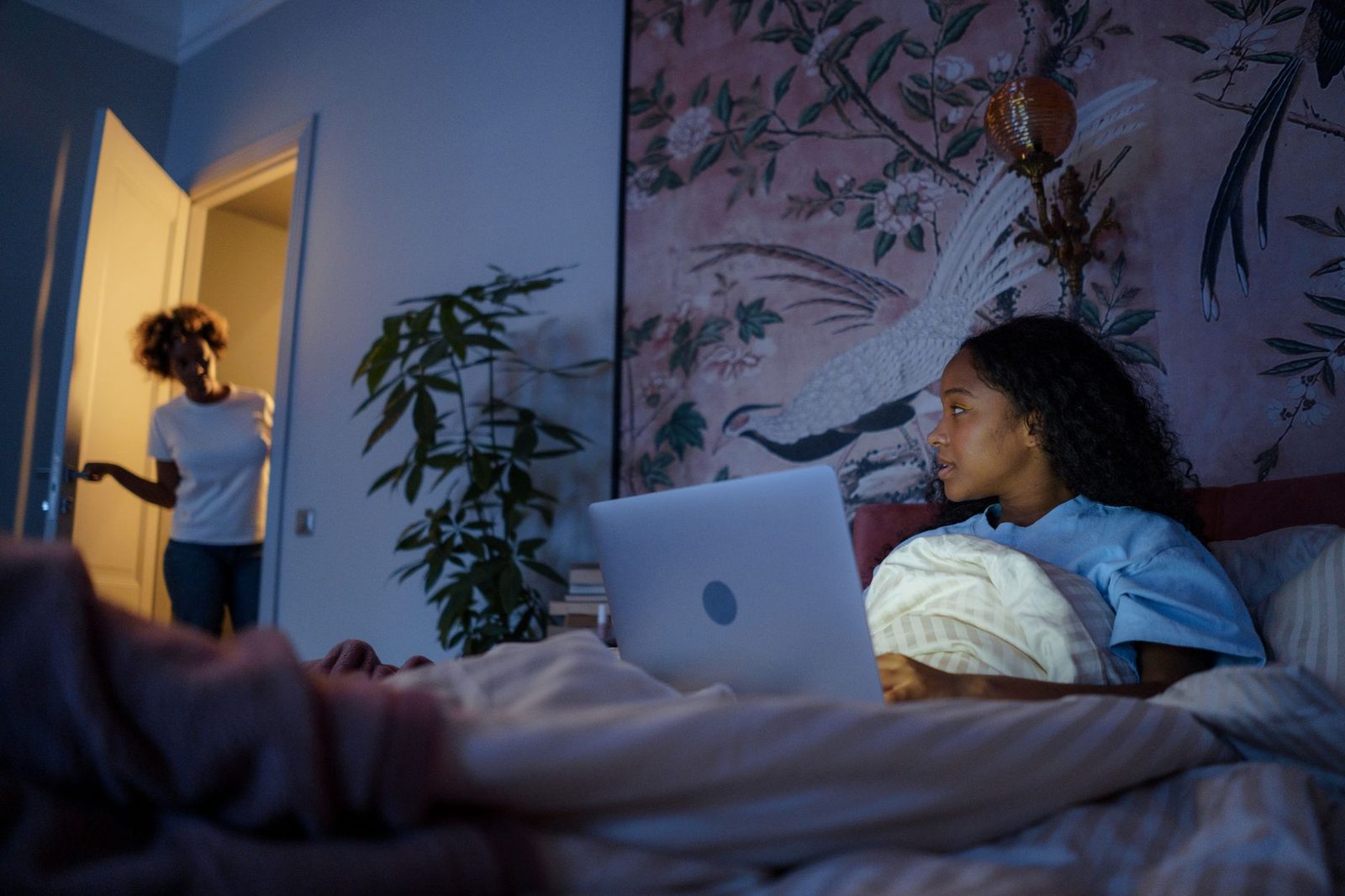
3. The "nocturnal" slot (11 p.m. – 3 a.m.)
This is where everything changes. Volume drops, but the quality of exchanges rises. People still connected at that hour are no longer killing time between two activities: they've made the active choice to stay.
Psychologists sometimes speak of a nighttime disinhibition effect: fatigue reduces executive control, lowers social filters and encourages confiding. People reveal more of themselves at 1 a.m. than at 7 p.m. It's also the time when you find the longest conversations, sometimes an hour or more with the same person.
- Upside: authenticity, depth, memorable conversations.
- Downside: that same disinhibition mechanism also lowers the negative inhibitions. Inappropriate behaviour, exhibitionism, aggression: off-peak hours concentrate a higher share of misconduct. Vigilance must increase proportionally.
4. The "spectral" slot (4 a.m. – 7 a.m.)
Very few people on the European side. You'll mostly come across insomniacs, night workers, and the Asia-Pacific region in the middle of its day. Exchanges have a particular texture, almost unreal. This isn't the slot for volume, it's the slot for strangeness — and sometimes for the most surprising encounters.
The day of the week matters as much as the hour
Another parameter is systematically ignored: the weekly calendar.
- Monday evening: low turnout, gloomy mood. People are back from their first day of work and mostly looking to decompress passively.
- Tuesday and Wednesday: paradoxically excellent evenings. Decent turnout, users who are mentally available, less "noise".
- Thursday evening: rising energy, anticipation of the weekend. A good volume/quality balance.
- Friday and Saturday evening: absolute peak in traffic, but also peak noise. Groups of tipsy friends, pranks, ultra-short sessions. Video chat becomes collective entertainment rather than a space for exchange.
- Sunday evening: one of the most interesting slots on a human level. This is the time of the "Sunday blues", when loneliness makes itself felt. Conversations there are often sincere, introspective, sometimes melancholy.
If you're after a real conversation rather than an outlet, the Tuesday evening / Sunday evening pairing is probably the best bet of the week. Conversely, if you want lightness and humour, Saturday at 10 p.m. is made for you.
Seasonality: winter is chattier than summer
The phenomenon is visible on most social platforms: traffic on online chat services follows a seasonal curve that runs inverse to physical social life.
In winter, short days, cold weather and staying indoors mechanically increase screen time. In summer — and we're in the middle of August as these lines are written — European traffic drops off in the evening: people are outside, on holiday, on shifted schedules.
This summer lull has an interesting consequence: the international share increases. In August, a French user will proportionally come across more South American or Asian interlocutors than in January, simply because the European pool has emptied out. For anyone seeking openness to the world, it's a windfall. For anyone seeking French speakers, it's the worst month of the year.
Note also the micro-peaks: evenings during long school holidays, public holidays, the end-of-year festive period (the evenings of 24 and 31 December concentrate a very particular population of people on their own), or weather events that keep everyone stuck at home.
The flip side: when the best slot is the worst one for you
Let's be clear about this. The qualitatively richest slot — the dead of night — is also the one that clashes most directly with your health.
The Institut national du sommeil et de la vigilance (INSV) and Santé publique France regularly point out that evening exposure to screen light delays melatonin secretion and pushes back sleep onset. The INSV also stresses that stimulating social interaction late in the evening maintains a level of cognitive alertness incompatible with falling asleep quickly: unlike a TV series watched passively, a live conversation demands attention, responsiveness and emotional management.
In other words: that 1.30 a.m. conversation that stayed with you may also have cut two hours out of your night. Anses, in its work on screen exposure, insists on the notion of cumulative sleep debt, which sets in insidiously over several weeks.
The best slot isn't the one that offers the best conversations in absolute terms, but the one that offers the best conversations without costing you your next day.
A simple compromise rule
Rather than giving up night-time slots or getting lost in them, adopt a boundary discipline:
- Set an end time, not a duration. "I stop at half past midnight" works far better than "I'll do an hour", because video chat has no natural ending — there are no closing credits.
- Save the dead of night for the weekend. On Friday and Saturday, sleep debt is recoverable. On Tuesday, it isn't.
- Plan a ten-minute buffer. After the last conversation, do something else (reading, tidying up, a shower) before going to bed. The brain needs to come down from social excitement.
- Lower your screen brightness in the evening. It doesn't compensate for everything, but it reduces part of the impact on falling asleep.
Using time as a deliberate filter
The real shift in perspective is to treat your log-on time as a search parameter. No filter by age, interest or country? The clock does part of the work for you.
- Want to practise without pressure? Break slot, 2 p.m. – 4 p.m. on weekdays. Nobody expects anything of you.
- Looking for the most French speakers? 7 p.m. – 10 p.m., Tuesday to Thursday, outside school holidays.
- Want to practise English with North Americans? 10 p.m. – 1 a.m. Paris time.
- Want a deep conversation? Sunday evening, 10 p.m. – midnight.
- Want to laugh and have light-hearted encounters? Saturday 9 p.m. – 11 p.m.
- Want to discover very distant cultures? European morning, 9 a.m. – 11 a.m., or the height of August.

Keeping a logbook (yes, really)
It may sound excessive, but the exercise is instructive: for two weeks, note down three pieces of information after each session — the start time, the duration, and a subjective rating out of 5 for the quality of the exchanges.
After ten or fifteen sessions, patterns emerge. Some users discover they're far better in the morning than they imagined. Others realise that their sessions rated 1/5 are almost all clustered on Friday evenings. It isn't the platform that varies: it's the intersection between your own energy and the available population.
Because there's a second variable, often forgotten: your chronotype. A morning person forcing sessions at 1 a.m. will be emotionally flat, less responsive, less funny — and will perceive it as a failure of the platform. An evening person logging on at 9 a.m. will have the same feeling in reverse. The best slot is always the intersection between the right pool of users and your own alertness peak.
What this reading of time says about us
There's something dizzying in realising that, behind the apparent anarchy of a random video chat, a worldwide map of human rhythms takes shape. When you click "next" at 11 p.m. on a Tuesday in November, you're not questioning chance: you're questioning the totality of human beings who, at that precise instant, have made the same choice as you — not to sleep just yet, not to switch off, to leave a door open.
This invisible synchronisation is perhaps the most moving thing about random video chat. We think we're drawing a number in a lottery. In reality, we're joining a temporary assembly, defined by an hour, a season, a collective mood. The people of 2 a.m. resemble each other, all over the planet, far more than they resemble the people of 6 p.m. in their own city.
Choosing your log-on time isn't about optimising an algorithm, then. It's about deciding which version of humanity you want to meet that evening — and accepting, in return, to offer it your own.